

The basics of sake and how to buy the good stuff.
Where to find it, how its labeled, and the time I fell in love with sake. Stand out at your next function and bring sake!

If you’re like me, your first experience with sake was perfectly adequate. You know, the inoffensive one you drank with your parents when they took you out to an upscale suburban sushi spot after turning 21? It tasted slightly bitter, like lightly alcoholic flavored water. You politely sipped because it was a nice buzz, but you secretly wondered who actually drank this stuff. (Okay, maybe just my experience?) It might’ve looked like this:
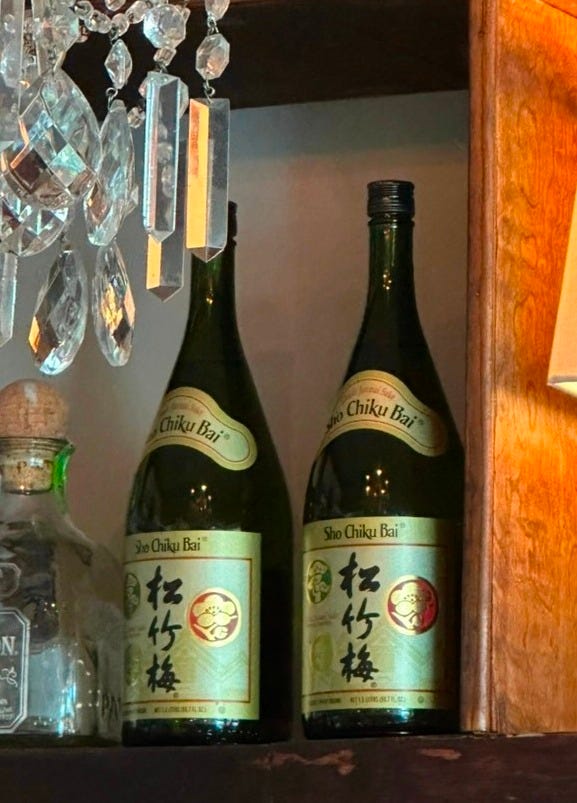
Every beverage serves its purpose: Franzia, Barefoot, 2 Buck Chuck, and entry-level sake like Sho Chiku Bai (pictured above). It’s a necessary frame of reference and it’s fun to indulge in memory lane from time to time. For beer and wine, the accessibility and knowledge is easier to come by, through sheer proximity and osmosis. It surrounds you everywhere—as the first items listed on beverage menus, or house parties and family gatherings, even free wine tastings at your local shop. So, it’s easier to build a repertoire of your likes and dislikes. However, given the small production and distribution of sake inside the states, it’s out of grasp for most people and shrouded in mystery (and confusing labeling). I was never convinced sake was for me, until I tried the sake that made me love sake.
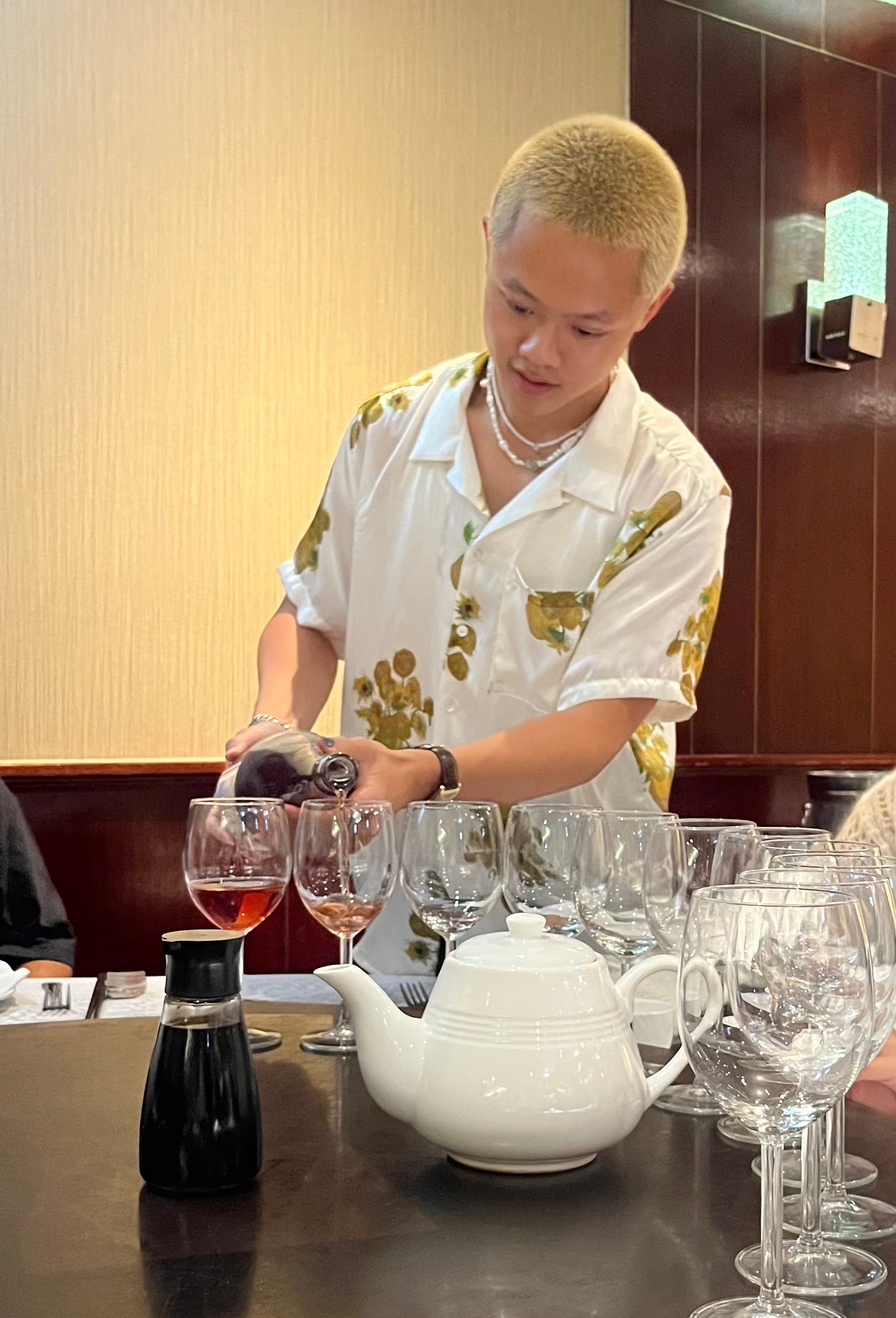
I discovered this sake while dining at Tonchin. Our table ordered a glass and our server came around with a rosé-hued bottle that made us question if they misheard our order. The color was similar to ruby red blush. Everything clicked, I tasted pomegranate and cherries, candied nuts and dried flowers, with a hint of sweetness. I never knew sake could be that complex and tasty. What started from a polite glass to accompany our cuisine, turned into forgetting about our meals and buying the remainder of the bottle. I couldn’t stop thinking about it, so I finally splurged on a magnum of Ine Mankai at Bin Bin Sake to share with friends.
Intro to Sake
When we think of sake, we typically think of two types: clear (Junmai) and cloudy (Nigori). Some would say Junmai tastes a bit cleaner and refined, while Nigori tastes a bit fuller or rounder with a hint of sweetness. This paints a small, fuzzy picture of the beverage.
Let’s rewind it back and orient ourselves to how sake is made (the quick version). All sake starts from a few ingredients: rice, water, koji, and yeast and requires a special (and really cool), unique process called multiple parallel fermentation.
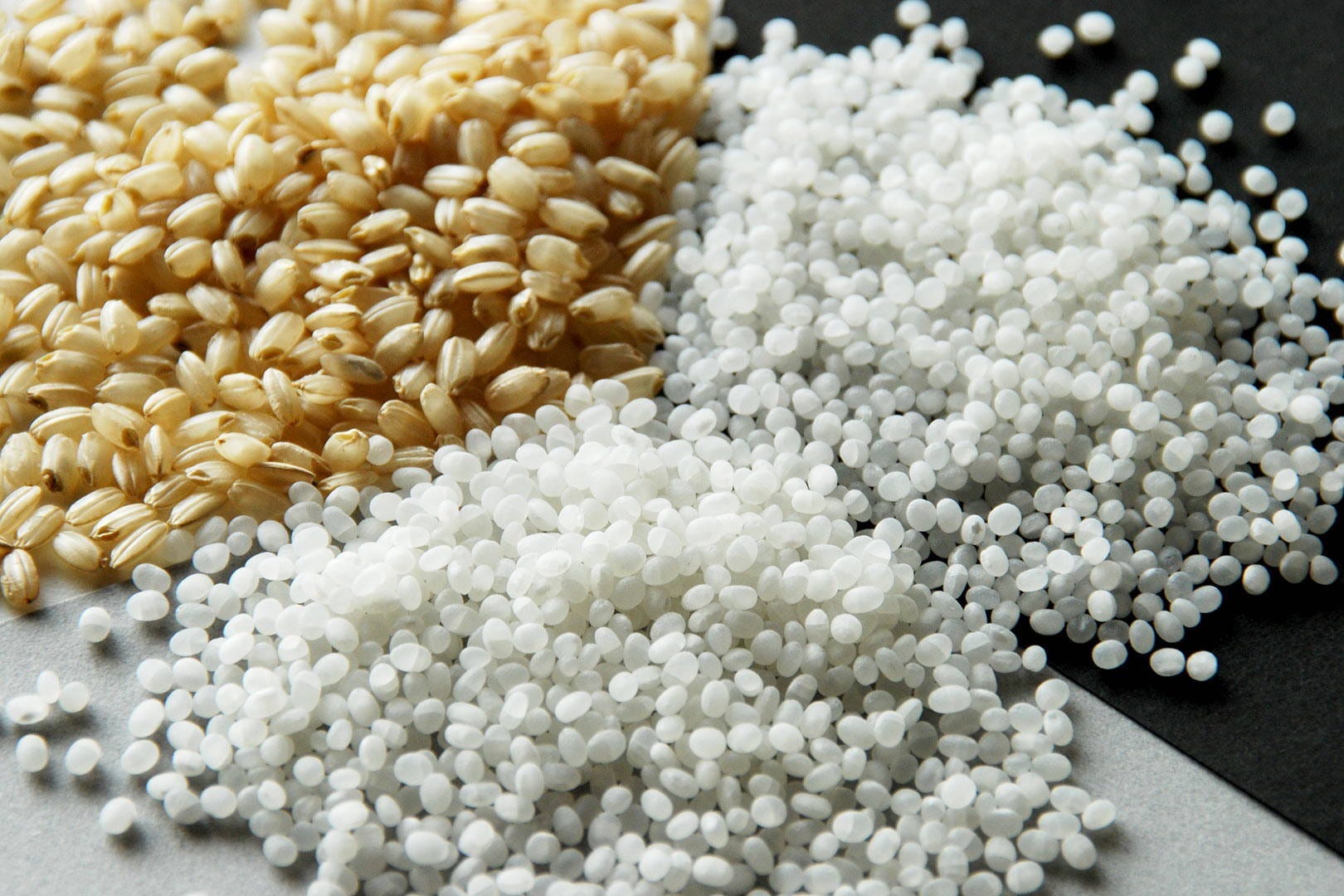
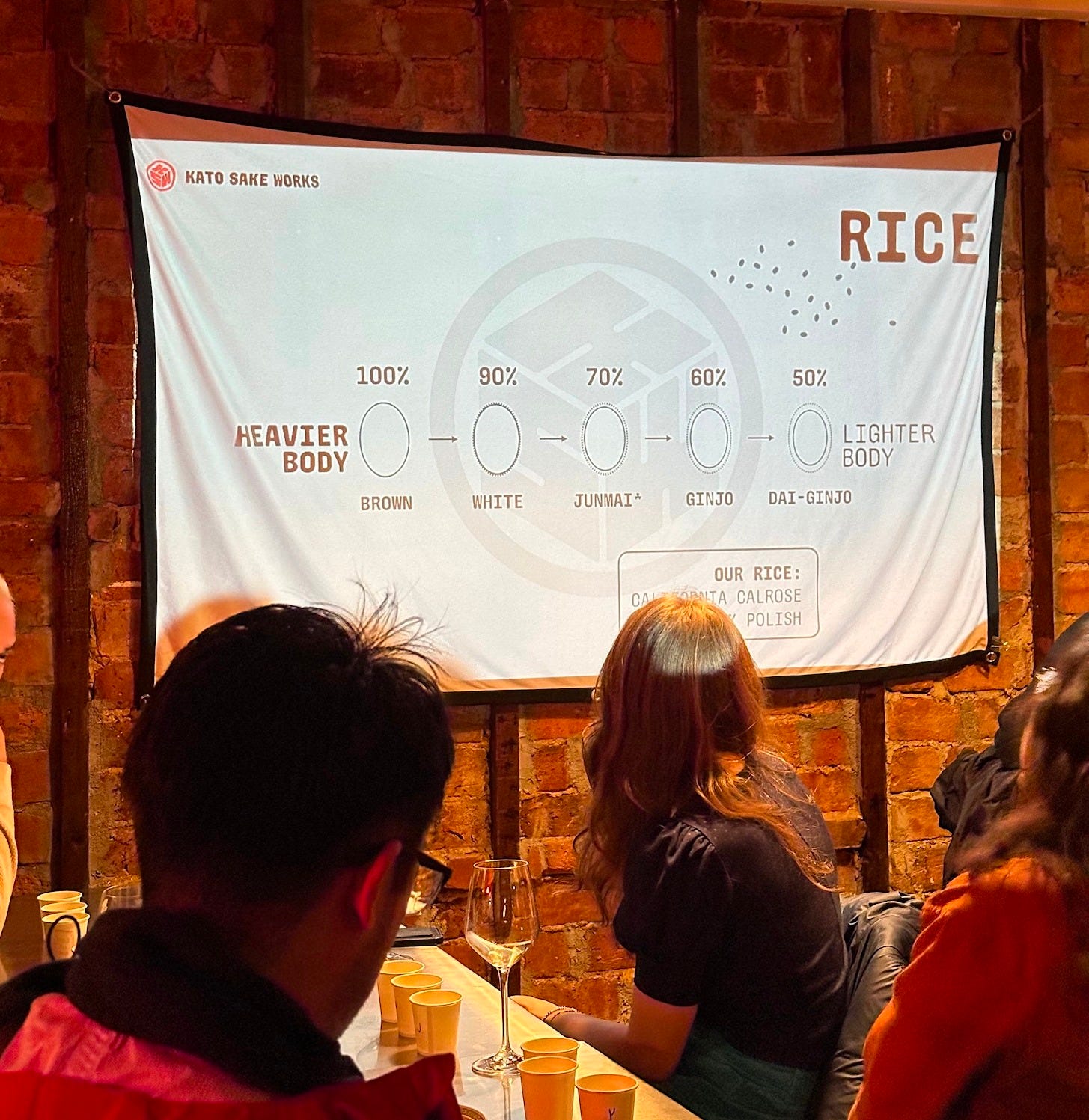
Everything starts with the ingredient that has raised civilizations, rice. You can technically use any rice for sake; but brewers use a specialty bred rice, called Sakamai. When rice is in its purest form, it’s technically just brown rice (the healthy stuff). When you begin to polish rice and take off its outer layers, it starts to whittle down into white rice (90% of the original grain). Eventually, once you polish to around 70% (and under) of the original grain, it becomes usable for sake.
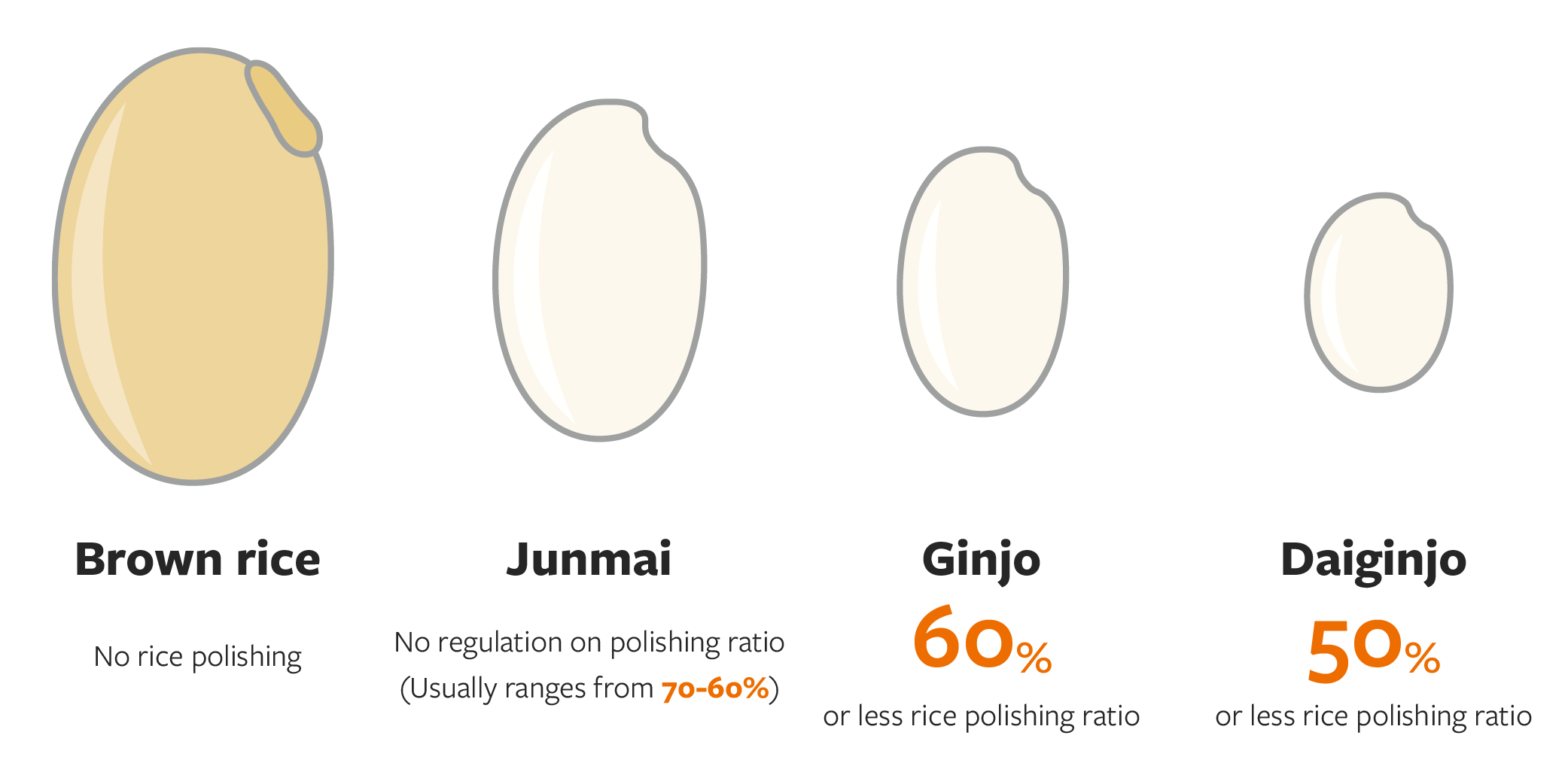
The more that rice is polished away, the higher the cost of sake—due to additional labor, time, and fact that now you need more rice to produce the same product.
What does polishing do and how does it change the taste?
Generally speaking, brewers can modify the style and taste of sake by controlling the Rice Polishing Ratio, also known as RPR (less polish = more umami + body; more polish = cleaner + fruitier)
Rice contributes to a wide variance in flavors, like tasting notes for different grape varietals. You can get more of the pure expression of it, the more it’s polished. Like anything else, there are diminishing returns with RPR. More polish isn’t always better. When buying sake, you’ll read terms like “ginjo” (60%) and “daiginjo” (50% and under) and its best to try ones with different polishing ratios to find your ideal balance.
What are the main types of sake?
The world of sake is wide and continuously growing: there is sparkling, unpasteurized, fruit sakes, aged, pure (no alcohol-added), and more. But today, we’re going over 3 of the most popular styles that you would see out and about at restaurants, bars, and specialty shops: Nigori, Junmai, and Nama. And some suggestions on where to start depending on your wine preferences.
Nigori is the hazy, cloudy, “unfiltered” sake. For the people who love jammy, juicy wines. The cloudiness is from the lees (yeast) kept in the bottle that give it a creaminess (similar to aged Champagne or Cava). This may be a controversial take to start with Nigori first, but I recommend starting here since it’s easy to love because of its satisfying texture and balanced sweetness. This is your Chilled Red, glou glou of sake: delicious, simple and everyone will enjoy.
Recommendation: Heiwa Nigori
Junmai is the cleanest, leanest style. For the people who love a crisp mineral-driven wine like Chablis or Riesling. Junmai literally translates to “pure rice” (no added distilled alcohol). You can find a bottle of Junmai for $6 or $600 and it all depends on the type of rice, rice polishing ratio, water, and artisanship. If you’re deciding on a bottle, read the descriptions and chat with staff and provide them details on what you’ve like with other beverages: do you like sweeter, drier, floral, or fruity? Describe your preferred tasting notes, similar to wine! (I promise you, it can really taste like lychee, citrus, tea leaves, guava, honey).
Recommendation: Dassai Blue 35 (my favorite) or Dassai Blue 50 for price/quality. Technically, both are junmai daiginjo and brewed right here in NY, using Hudson Valley water and Arkansas Rice (for Blue 35).
Nama is unpasteurized sake. For the people who love funky, natural wine. Get weird with Nama. Rare, delicate, and produced in small quantities, this has to be consumed quickly after production. And usually only sold at sake breweries or specialty shops (since it lasts for 3 months unopened, couple days opened, and requires constant refrigeration). Pasteurization provides shelf-stability (and may remove beneficial bacteria and alter flavor), so by leaving this sake unpasteurized, you’re drinking the stuff as fresh as can be. The flavors can range from creamy, acidic, and overall a bit weird, yet still refreshing. Drinking Nama makes you stop and really pay attention.
Recommendation: Kato Sake Works Nama, Dassai Blue Nama
Try something new for a change
Sake is a relatively undiscovered and untapped world but its getting its flowers outside of the confines of your traditional Japanese restaurants. It’s slowly appearing in more menus and in dedicated sake and listening bars, and eventually, more slots in fine dining. It’s considered a safe bet in terms of food and drink pairings, but more than anything, take a chance and consider mixing it up at your next function! Bring something new for a change. Pull up to the party with something other than your typical beer, wine or seltzer. Everyone will notice and their tastebuds will thank you.

Where to find delicious sake
My education and passion started from these folks, so while only a few are listed here, this is a small glimmer into a huge world.
(Sake Brewery) Dassai Blue (Upstate NY): one of the OGs of sake production in Japan with a new(ish) brewery in Hudson Valley (~45 mins north of Beacon). If you go anywhere, go here. Unbelievably inexpensive for some of the highest-quality sake you’ll taste. They offer side-by-side tasting with different rice polishing ratios and styles, including Nama, which is the best way to really learn by experience.


(Sake Brewery) Kato Sake Works (Bushwick): casual and accessible, Shinobu Kato (owner and namesake), has an infectious smile and energy, while making a damn good product. Also, he also teaches casual and engaging Intro to Sake classes. I went to one a couple years ago at Land to Sea and loved it.
(Tastings and Sake Retail) Bin Bin Sake (Greenpoint)
The sister retail shop to Rule of Thirds. They have all types of sake and in different formats (where I buy my favorite sake). George and Sophia of Bin Bin really know everything about everything and can guide you towards your next favorite bottle. They hold tastings, markets, and events every now and then, so keep an eye out.
(Other Specialty Sake Shops) Kuraichi (Industry City)

Appreciate you for reading, your support is what’s keeping this newsletter alive. Share with a friend, leave a comment, and subscribe. Say hello to my new Instagram all about wine ☺︎.
If you’re interested in partnering up for a future event or collaboration—send me an email at ericdo95@gmail.com.

I’ve always had an interest in Sake and I’ve now been catapulted into wanting to know even more. Thank you for sharing what you know, I really enjoyed reading this a lot!